In the archive: The Sudan Archive at Durham University
Anglo-Egyptian Condominium Sudan won its independence from the British in 1956, becoming the Republic of Sudan. In 1957 The Sudan Archive at Durham University was founded to collect and preserve the archives from British people in Sudan whether they be bureaucrats, missionaries, soldiers, doctors or teachers.
While large amounts of the archive has been digitised, indexed and catalogued, there remains much in the archive that is only accessible via a visit to Durham University. This makes this valuable archive of Sudanese history inaccessible to many Sudanese, whether due to financial constraints or visa restrictions such as UK Visa Ban for Sudanese students.
The following article is an exploration of the materials in the archive that relate to Sudanese Armenian history, it is by no means exhaustive and there remains much in the archive that is yet to be uncovered. Nonetheless, via this exploration, we firstly understand the type of material this archive has on Sudanese Armenians, secondly we gain a different source and perspective on Sudanese Armenian history and finally we learn more about the colonial system within Sudan during the British period via the interactions between the Armenians and the British.
sudanahye would like to extend its gratitude to the team at Durham University who went above and beyond to be hospitable to us. The references for the archival documents can be found in the notes at the end of the article.
Armenians in the Mahdiyya
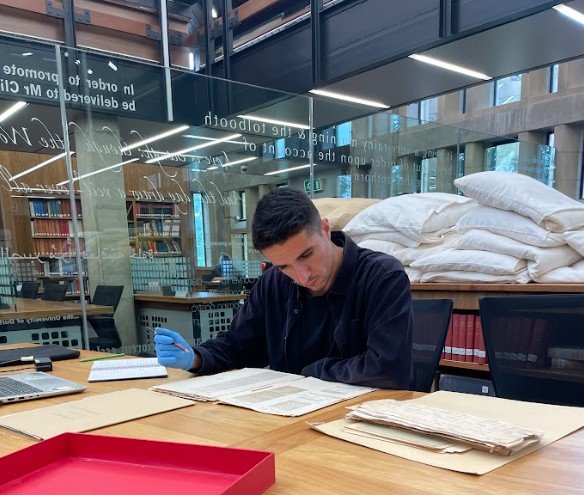
Description: The author at the Sudan Archive at Durham University Location: Durham, UK
Source: Vahe Boghosian 2025
Our article on Armenians in Sudan in the Turkiyya and Mahdiyya looked at available literature to present a comprehensive picture of what we know about Armenians in Sudan before the British conquest. The Sudan Archive at Durham University expands our understanding of Armenians in Sudan in this period. This includes Armenians in the employ of British such as Brutiras Sarkis as an agent of Dr Emin Bey and Michael Moses (Movsesian) getting into ‘trouble with the authorities in the Bahr el Ghazal’ before having a British official vouching for him. Nubar Pasha is in correspondence with the British in reference to Sudan in his capacity as a statesman in Egypt such as in a letter from Riyad Pasha’s telling Nubar “why trouble, it is for England to protect Egypt, otherwise what is the object of a costly army of occupation” in regard to the Mahdi’s revolution in Sudan.
More interestingly we see Armenians mentioned in Sudan Intelligence Report no 60 from 1898 discussing the details of the British conquest of Sudan. Two Armenians under the category of ‘Armenian’ within ‘Ottoman Subjects’ are listed as refugees from the Battle of Omdurman who were taken prisoner from garrisons in Sudan. The first is a man called Artin from Khartoum (whose name is listed in the Mahdia as Artin) and the second is Joseph Artin, his Coptic wife and his brother Sarkis from Gedaref. We had previously learnt of an Artin Arakelian who introduced tobacco farming to Gedaref in 1859 before having his farm looted and being killed in 1889 in our previous study from The Historical Dictionary of Sudan. This archival evidence states he (and other members of the Artin family) had survived the Mahdiyya as prisoners and were alive in 1898 when they were found as refugees from the Battle of Omdurman, but it is unclear what his fate is from there. This mention gives us documentary evidence that there were Armenians living in Turkiyyah and Mahdiyya Sudan.
While we know from Armenian accounts that the Armenians went straight after the British conquest in 1899 to begin to trade with the British, we also see a letter from 1900 in from a man named Arakil sent to Slatin Pasha regarding a debt he owed Arakil’s late brother Boutres Bek Sarkis representing ‘the remaining balance for the supplies at the time of Your Excellency’s travel to Dongola’.
The mentions of Armenians in the Durham Archive related to the British conquest of Sudan do not change our conclusions from our study of Armenians in the Turkiyyah and Mahhdiya, but it does confirm it with solid documentary evidence. It confirms that there were isolated Armenians in Sudan as an extension to the presence in Egypt, there were Armenians in the service of the British Empire (though as agents rather than employees) and there were Armenians who traded with the British in the earliest days of their colony.
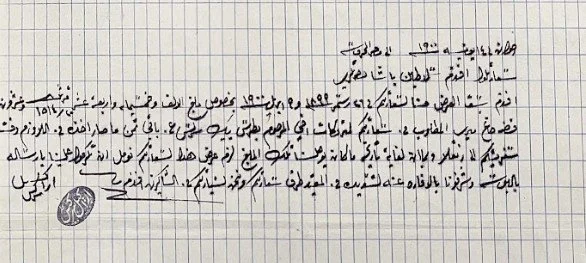
Description: A correspondence from Arakil Sarkis to Slatin Pasha from 1900
Location: Durham, UK
Source: Sudan Archive at Durham University (SAD.438/669/1–2)
A religious solidarity
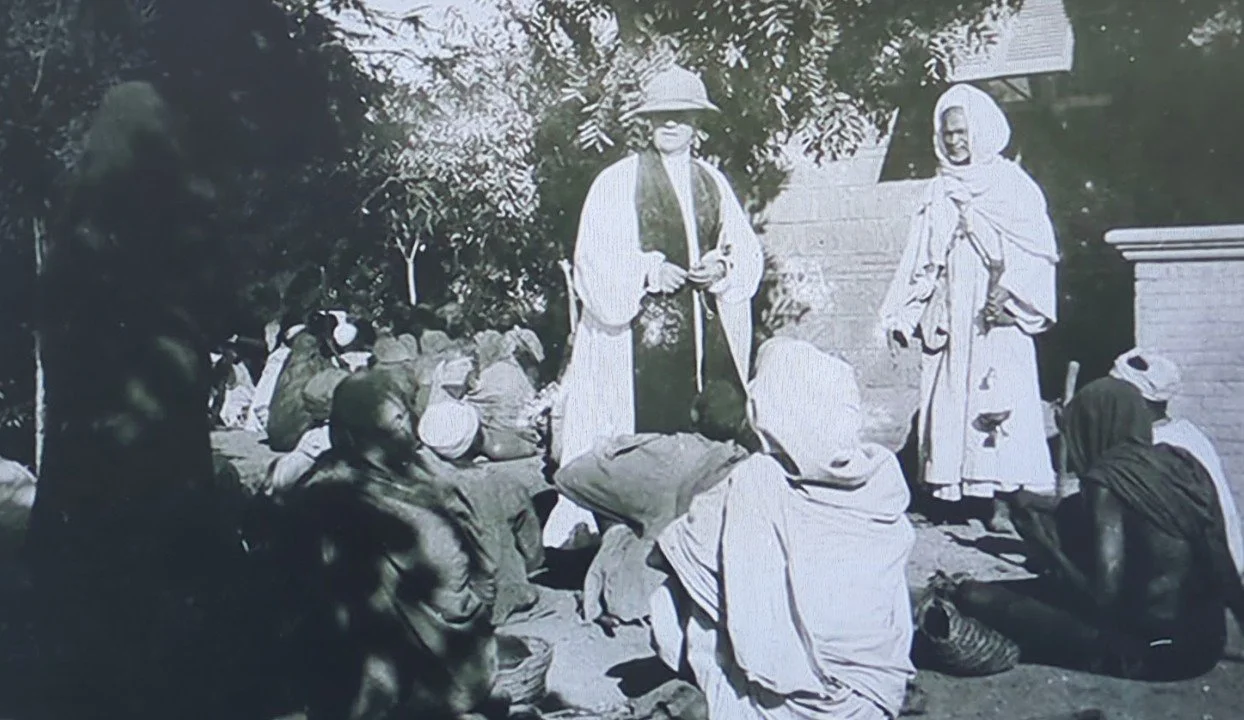
Description: Bishop Gwynne in Sudan
Location: Durham, UK
Source: Sudan Archive at Durham University
The archive at Durham has a large collection of formal documents linked to the Anglican Church in Sudan and the personal documents of clergy who served in Sudan. Together, these sources offer insights into the relationship between the Armenians and the Anglican Church in the period preceding the establishment of the Armenian Church in Khartoum just after Sudanese independence.
In 1950 the Armenian Catholicos (head of the Armenian Church in Echmiadzin, then Soviet Armenia) at the recommendation of the then Prelate of Armenians in Egypt, Mampre Sirounian gave Right Rev Llewellyn H Gwynne Bishop of Egypt and the Sudan (henceforth referred to as Bishop Gwynne) an award as a recognition of his ‘humanitarian work’ …’rendered to the Armenian Colony of Sudan’ for ‘allowing full privileges of worship and Communion in the Anglican Church’. The letter states the award was ‘in compliance with the unanimous wish of Armenians in Sudan’. In Gwynne’s reply to the Catholicos we get a hint of why this was ‘unanimous’:
“When I was a missionary to Khartoum in 1899 I found amongst the refugees and new arrivals all sorts and conditions of Christians and amongst them Armenians, for whose suffering I had great pity and sympathy. After the first Great World War there were more stricken survivals from Massacres in Turkey. The Armenians had no priests so we took them under our wing and welcomed them into our Cathedral at Khartoum where in the absence of their own priests their young laymen chanted some of their beautiful Gregorian hymns and liturgies. We buried their dead and baptised their children”
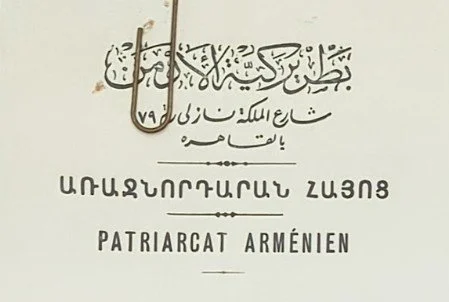
Description: A letterhead from the Armenian Patriarchate in Cairo in letters to Bishop Gwynne
Location: Durham, UK
Source: Sudan Archive at Durham University (SAD 419/6/78)
The archive contains documents that provide further examples of what the welcoming of Armenians into their cathedral looked like. In the 1912 ‘Annual Service of the Fellowship of Unity’ the Armenians partook and sang hymns such as ‘Soorp Soorp’. This fellowship allowed all Christian denominations in Sudan such as Greeks, Armenians, Copts and others (but not Catholics) to come together to worship and also to hold sacraments. The wedding records of the Anglican Cathedral of Khartoum give us documentary evidence of what we previously only had oral and photographic evidence for - Armenians getting married in the Anglican church under the non-Mohamedan Marriage Ordinance of 1926, with their nationality stated as ‘Armenian’ and religion stated as ‘Armenian Orthodox’.
Another outcome of this ‘Unity Fellowship’ was the establishment of Unity High School as a school for Christian girls in Khartoum. In letters from the 1930s from the Unity High School principle to an Armenian bishop in Egypt in search of funds we get a look into the dynamics of the school vis a vis the Armenians. In a 1931 letter we see a confirmation that “the Armenians use of our Cathedral at Khartoum to hold their services and I arrange with our clergy to give them every assistance” and a reference to who the Armenian community was: “In Omdurman and Khartoum there are a large number of Armenian children whose parents were refugees after the war. Some of the girls are being trained in our High School to fit themselves for posts as typists or telephone girls or as teachers in schools or nurses in hospitals”. These letters specifically are asking for financial support on account of the economic depression which meant ‘parents of these children or their community cannot afford to keep them in school’. In a 1932 letter it becomes clear the school is struggling to find students to fill it and “in order to procure these girls we must lower the fees, but only in a way that they are to be raised as soon as the tide of property returns”. The letter also references the ‘Unity School Committee consisting of representatives of the Greeks, Syrians, Armenians and Copts’ and Gwynne’s personal relationship with Mr Vanian, one of the Armenian community leaders, who he would contact to try and find more Armenian students since the Armenian Evangelical Bishop from Egypt gave a positive reply and agreed to send funds to assist Armenian girls be placed there.
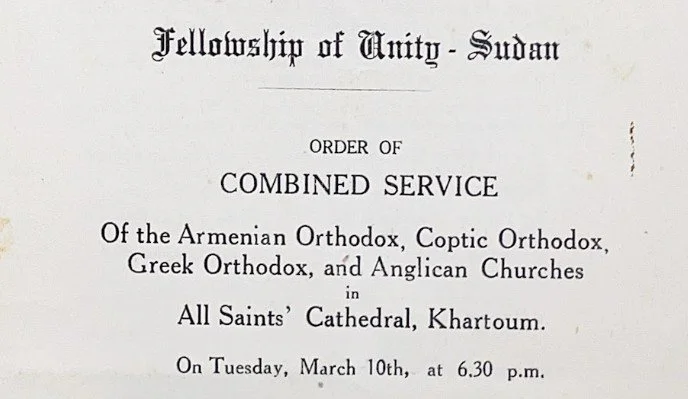
Description: The programme for the ‘Fellowship of Unity’ combined service
Location: Durham, UK
Source: Sudan Archive at Durham University (SAD.683/1/10)
Though in a later 1937 letter on the same topic, the fellowship of unity among Christians reveals another side to their admission policy. Recognising they need more pupils they discuss the admission of Sudanese girls before clarifying they “must be careful to take only one or two of those really intelligent and of good families” because “it is likely that at first no Sudanese would be of the required standard” and stating that “the Greeks are most likely to object to mixing with them”.
Overall these documents give us new sources on the relationship between the Christian communities in Khartoum in this period as part of the ‘Fellowship of Unity’ with Bishop Gwynne as a driving force in this effort. In his reply he also alludes to his personal relationship with the Armenian community: “It is a special pleasure to me to know that this Grand Cross with the illuminated address and Charter has been donated by the Armenian Colony in the Sudan many of whom are my friends’.
Through this religious lens we also receive non-Armenian references to the difficult conditions of the Armenians who came to Sudan having survived the Adana massaces of 1909 and Armenian Genocide of 1915. While certain Armenian newspapers and primary sources spoke of these migrants, other archival sources do not contain information on this wave of Armenian migration.
Regarding Unity High School, all through the British period, this was a common destination for Armenian girls to study at, especially after graduating from the Armenian school of Khartoum. Their money woes remind us that the initiative was a private benevolent one, unlike Gordon College which was a project backed by the colonial state. Unlike Unity High School, Gordon College had a specific role in the colonial apparatus, to train Sudanese for bureaucracy and to be an institution that reflected British power as spoken to by a young Lebanese Oxford graduate who went to Sudan to teach in Gordon College in 1926: “I disliked Gordon College the moment I walked into it. It was a military, not a human institution…The pupils were expected to show them not the ordinary respect owed by pupils to their teachers, but the submissiveness demanded of a subject’.
There is still more to be researched on this topic both related to archives of the Anglican Cathedral of Khartoum, Bishop Gwynne and Unity High School which had Armenians involved in the management of the school along with the other Christian communities.
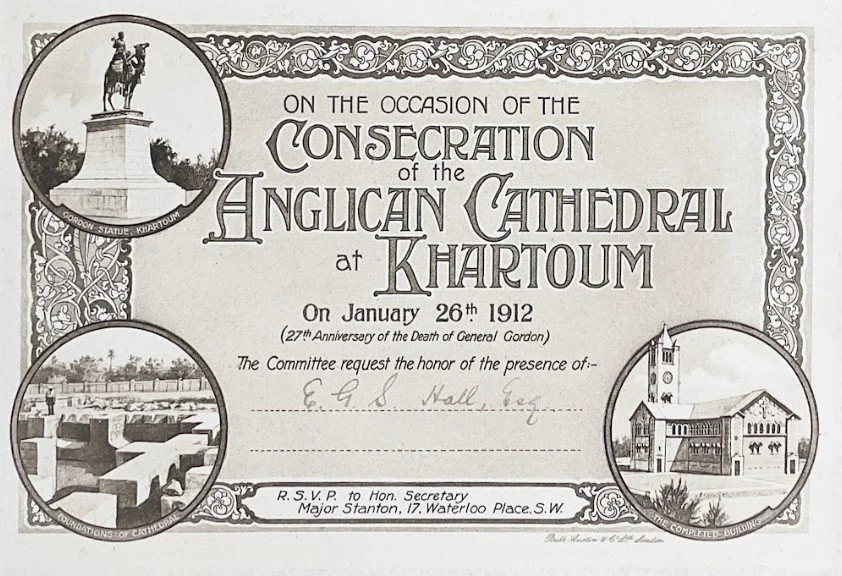
Description: The programme for the ‘Fellowship of Unity’ combined service
Location: Durham, UK
Source: Sudan Archive at Durham University (SAD.683/1/10)
Governor General Reports and early Armenian demographics
In the 17th century the Sudanese oracle Sheikh Farad Wad Taktuk reportedly said: “at the end of time the English will come to you whose soldiers are called police: they will measure the Earth even to the blades of sedge grass”. No where is this ‘measurement’ of the grass more evident than in the reports of the British officials who ruled Sudan. While most of these are housed in the National Archives in Kew the Sudan Archive at Durham University has digitised Intelligence Reports, Directories, Government Gazettes and Governor General Reports. The latter of these has thousands of pages of meticulous details on the bureaucracy of the management of the colony, from agriculture to customs, from military movements to health data.
These digitised reports are not yet searchable via OCR (key word search), and for a keen researcher there are likely many more references to Armenians to be found on them. The reports in the early years feature discussions on migration which give us valuable clues into the British policy towards Armenians and other ‘foreigners’ coming to Sudan. In the 1902 report it is noted that “poor Europeans and Levantines… arrive here seeking work either as mechanics and masons, or any other employment which they can obtain” and are “without any visible means of support”. The source continues “failing to get employment at Halfa, they endeavour to go to Khartoum and pay their fare on the Railway by what they can save out of charity or a living wage here.” The British keep track of these migrants via a register, issuing passports "when considered desirable” but also admitting “it is at times a problem to know what to do with them”.
In the 1903 report there is a brief discussion as to the agricultural potential of the country and how “under these circumstances it is certainly desirable to encourage immigration into the Sudan”, those circumstances being the British perception that ‘‘it should be no surprise that the Sudanese should be unwilling to work”. The report states the root of all the labour problems in contrast to the British perception of Sudanese culture of the time is that: “a man must work or starve, has not yet been brought home to the mass of inhabitants of Sudan’’. In the reports there are references to the numerous experimental farms throughout the country which via other sources we know Krikor Bozadjian, an early Armenian migrant to Sudan, was working on in this early period of British rule. In 1905 on this topic it is stated that there is “there is also a large demand for skilled labour. The Sudan Government is doing all that it can to encourage technical education; but I have little doubt that for some years to come, the country will have to depend mainly upon foreigners for this description of labour”. Combined, these are as clear a statement as we can get from the colonial administration as to how they viewed migration from communities like Greeks, Armenians, Jews, Italians, Syrians and others into Sudan - what at first was an attempt to manage foreign migration, became a policy of encouragement.
In the section of the report which gives details on the Halfa province, the province of Sudan that borders Egypt, there is data on immigration by nationality in 1902 and 1905–1910. The data we have excludes tourists who are visiting Sudan as they do not speak to migration and community, but visitors. The data expectedly reinforces our hypothesis that in the pre-Genocide period Armenian migration was majoritively male merchants without families, with 'women' being the proxy for a family or a wife, in line with the bandukht (sojourn) trend of the 19th and early 20th centuries.
What we did not expect was for the migrants who were not merchants to account for 40.4% of Armenian migration to Sudan in this period, contrary to what our other sources suggested of a community primarily composed of merchants until after the Genocide when refugees arrived. Additionally, approximately 20% of arrivals across the period are recorded in the "various" category, which remains unresolved - we do not know if these are merchants travelling without recording their occupation, a mixed group of less common occupations, or those seeking any work. We can infer that this non merchant migration reflects the ‘poor Europeans and Levantines’ seeking work as ‘mechanics and masons’ referenced in the 1902 report. Across the standardised 1906–10 period the percentage of Armenian migration which are merchants is at 59.6% compared to 18.4% for non-Armenians, meaning the Armenian proportion of merchant migration compared to others is roughly 3.2 times the average rate. Jewish and Syrian communities have an almost equal percentage of merchants arriving, though both other communities have a higher proportion of women in their statistics, which we can take as a proxy for families. The data suggests that Armenians are still predominantly lone males seeking wealth to send back to their families in the indigenous homeland, whereas Syrian and Jewish merchants appear to have been arriving with or followed by their families. However, the data challenges our conclusions from research in the AGBU archive that the pre-Genocide community were almost all well off merchants, revealing that almost 4 in every 10 of the 193 Armenian migrants were not merchants which also suggests more Armenians in Sudan before the Armenian Genocide in 1915 were not financially prominent or were escaping violence in the Ottoman Empire. This is in line with the new inference from Bishop Gwynne’s letter that he encountered destitute Armenians as far back as 1899.
We also see a surge of migration by Armenians in 1907, however when we look at the Armenian data next to the other nationalities we see this is a more general trend rather than something specific to the Armenian community. These can be explained within the context established earlier, that the British authorities wanted foreign migration, particularly those who could provide technical labour, more so than merchants. The surge around 1906–7 and the migration numbers more broadly were heavily dominated by Greeks, which is consistent with them being a much larger and more renowned community than the Armenians in Sudan throughout the 20th century. Greek migration is also overwhelmingly composed of the category of artisans that being masons, carpenters, construction workers - who were in demand.
A further surprise was the concentration of Armenian arrivals towards Khartoum and Omdurman in the 1905 destination data. Early AGBU membership lists suggest a significant Armenian presence outside Khartoum in this period, so the degree to which the migration data points almost exclusively to the capital was unexpected, though the small sample size of 15 makes it difficult to draw firm conclusions.
This dataset is unique in providing statistics for Armenian and other communities' migration to Sudan, but its structural limits matter for interpretation. The recording categories changed across the period, tourist figures (excluded) are large enough to distort the picture significantly, and some nationalities such as Bosnians (66 in 1905), appear once and then vanish from the record. The data captures formal arrivals via Wadi Halfa only and tells us nothing about those who arrived by other routes, stayed informally, or were already resident. That being said, the data still suggests the Armenian community life in Sudan was larger (with 193 recorded Armenian arrivals across this period) and more varied in terms of occupation than what we previously thought based on our other sources.
The librarian at University of Khartoum
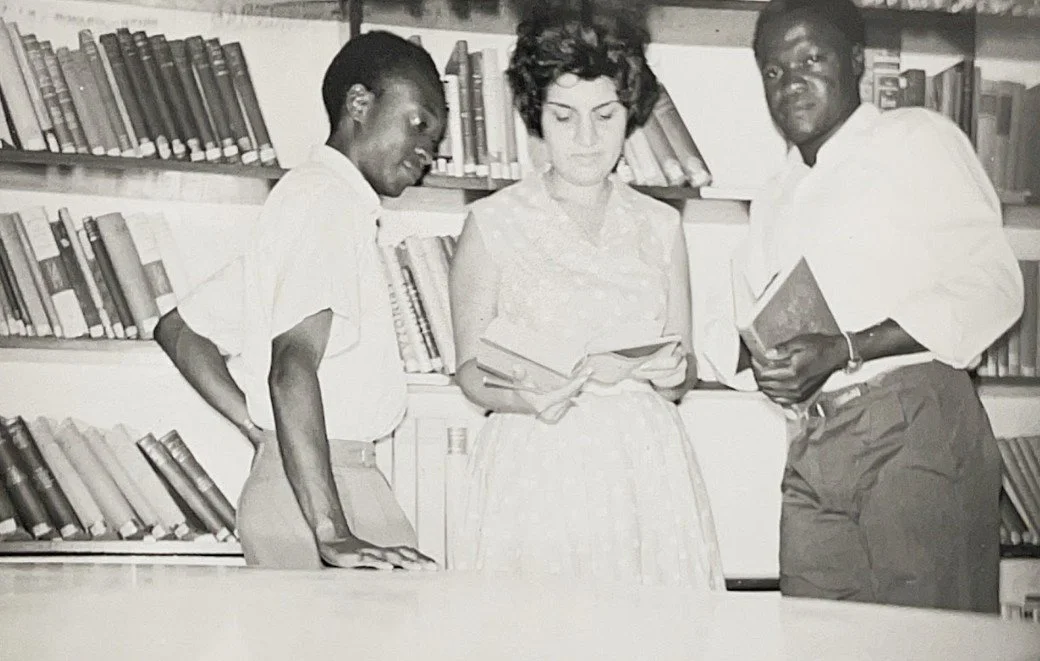
Description: Shake Keshekian at the library
Location: Durham, UK
Source: Sudan Archive at Durham University (G//S 1553)
The following collection demonstrates the range that this archive has come to contain, and we only knew of it because of the notice we received from the team there.
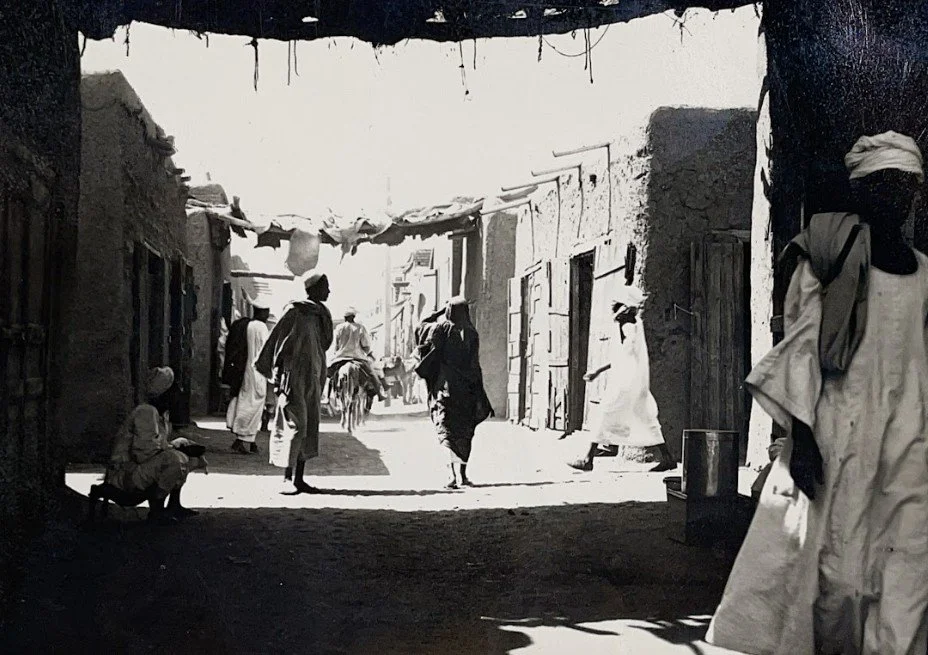
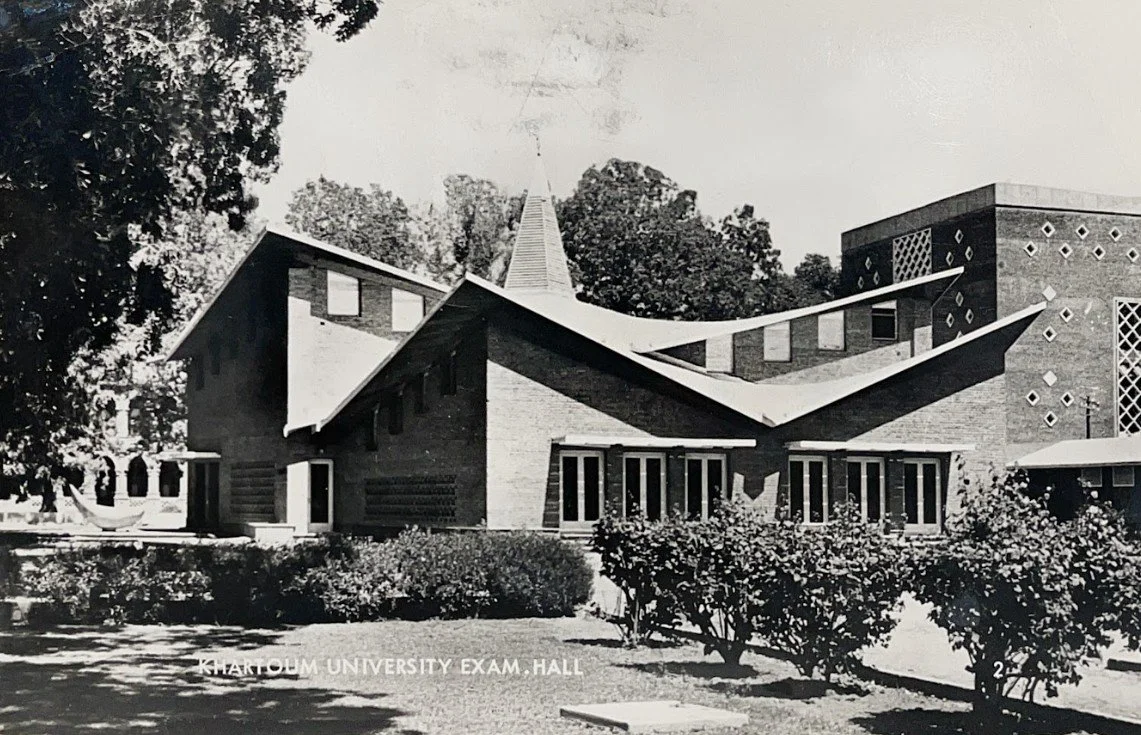
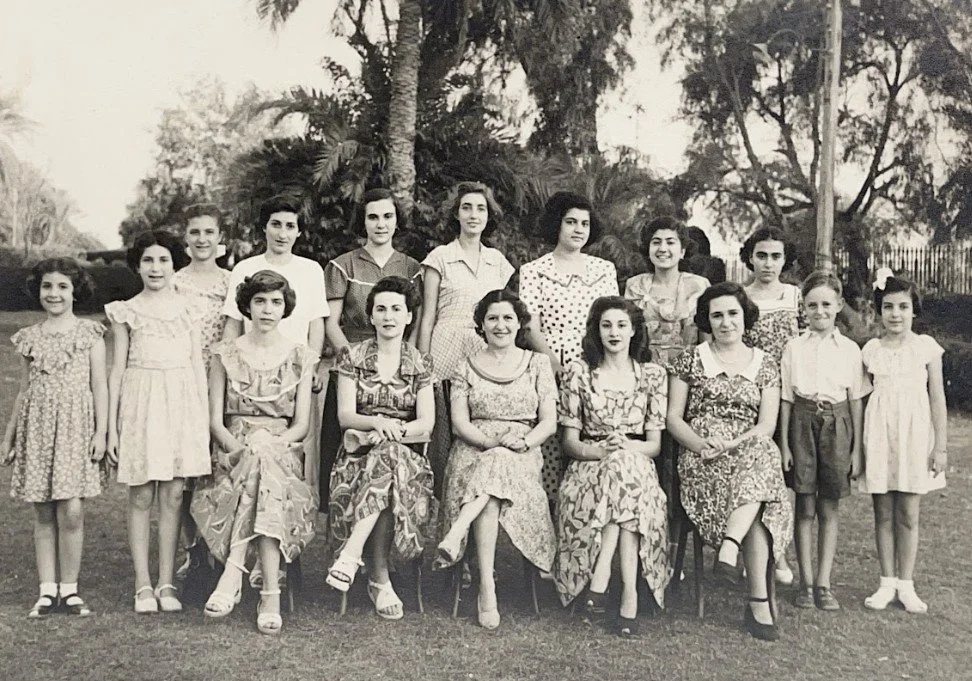
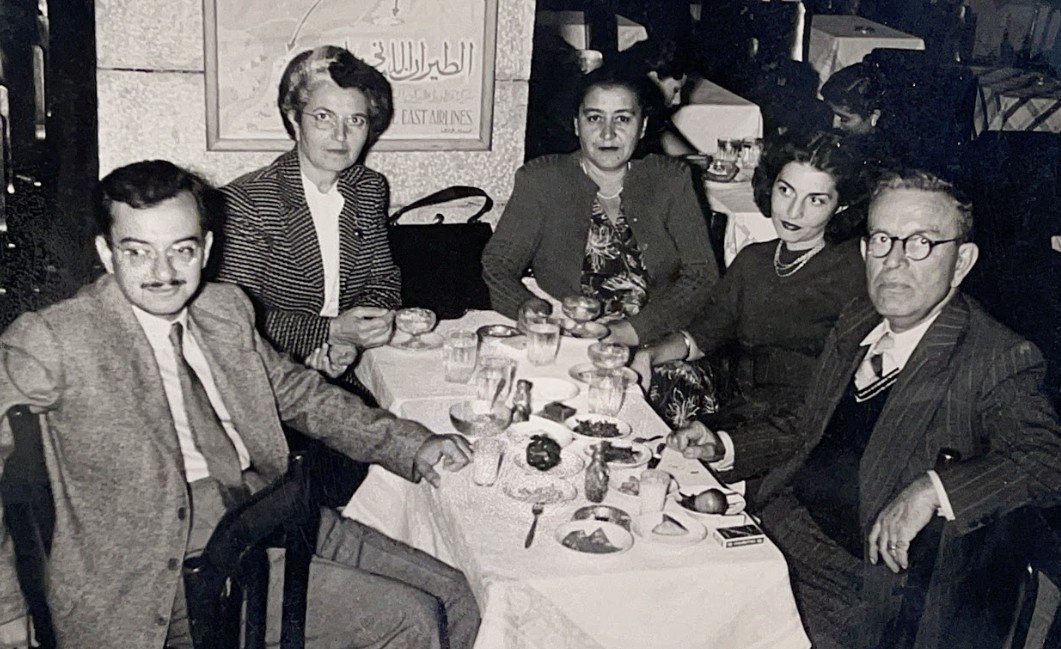
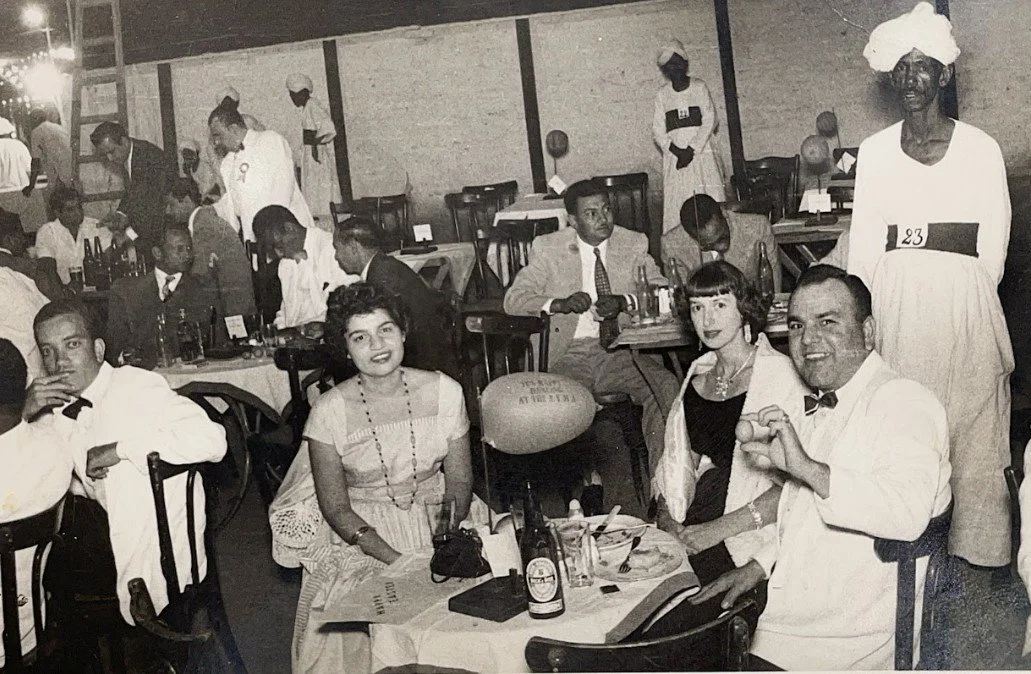
Shake Keshkekian was born in 1934 in Sudan, after her studies in the UK she worked at the University of Khartoum as a librarian. This collection has her personal documents, including books on Armenian history, books on Sudanese history, personal postcards and letters, photographs from her life in Sudan and much more that details the life of a well educated and respected Armenian, a ‘Sudanahye’ - a member of the generation of Armenians who were born and raised in Sudan. Her life in Sudan is a testament to the changing attitudes of the time, that being a woman who was educated and worked as a professional within academia, her photographic collection captures the ‘golden era’ of Armenian life in Khartoum, a life lived in conjunction with the other communities. The Shake Keshekian collection contrasts with the other Armenian material in the Durham archive which is of a more official, bureaucratic or commercial nature.
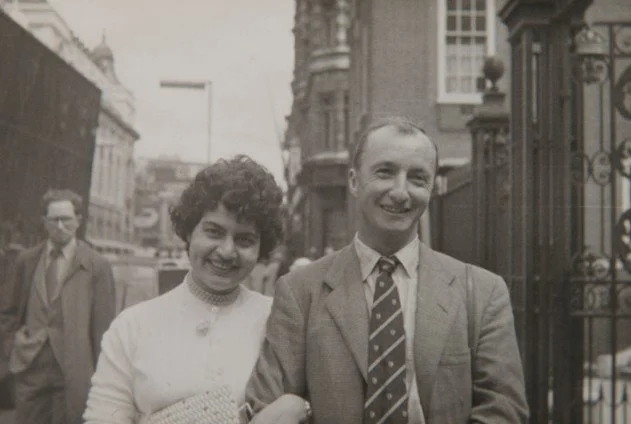
Description: Shake Keshekian with Ewan
Location: UK
Source: Russell McDougall, Letters from Khartoum: D.R. Ewen — Teaching English Literature, Sudan, 1951–1965, Postcolonial Lives, vol. 1 (Brill)
We can cross reference Shake Keshkekian’s life with mentions of her in Letters from Khartoum, a biography of D.R. Ewen, a Scottish educator who taught English Literature at the University of Khartoum from the late colonial period through to the 1964 revolution. The book describes her as a popular student from a well-known Armenian merchant family. Her parents had met in Egypt after fleeing the Armenian Genocide, and had built a life in Khartoum running a women's clothing boutique. Her parents, were Genocide survivors and took pride in their daughter's academic career and professional achievements. She went on to study librarianship in London, returned to Khartoum as a librarian at the University of Khartoum Library, and eventually migrated to the United States in 1966 to take up a position at Stanford University Library, where she rose to Senior Librarian before retiring in 2000. She died in 2018. The book describes a romance between her and Ewen in Sudan, and though she never married the book says that when she passed away her carer cleared her belongings and found a single photograph on her bedroom dresser: “Ewen, arms folded, smiling into the camera”.
A charge for profiteering
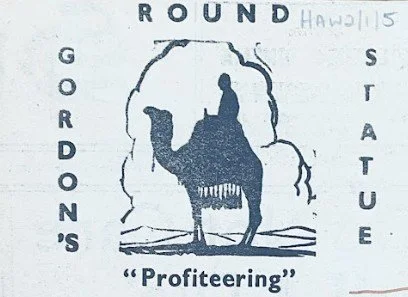
Description: ‘The Hump’
Location: Durham, UK
Source: Sudan Archive at Durham University (HAW.2/1/1–30)
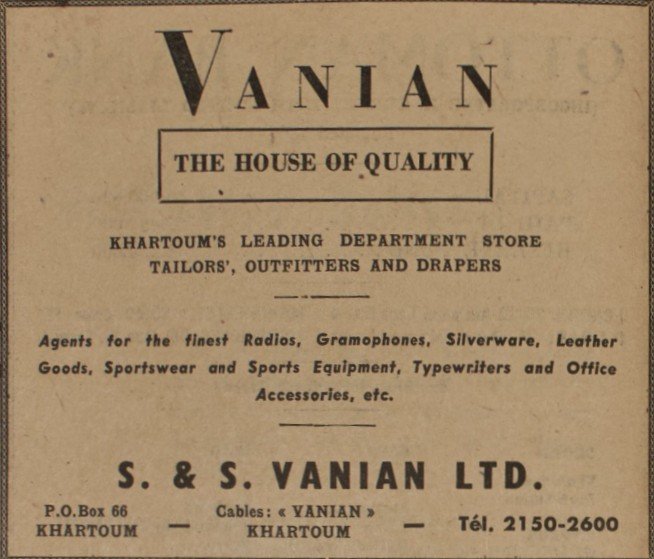
Mr Vanian was referred to earlier in the Unity High School documents as a community leader whom Bishop Gwynne wanted to speak to in order to source more Armenian students for the school. The Vanians have come up repeatedly in our oral history archive as one of the most important and prominent Armenian families. S&S Vanian was their famous department store in Khartoum, colloquially known as the ‘Harrods of Africa’, managed by Sarkis and Soukias Vanian. This enterprise made them some of the wealthiest Armenians in Sudan (if not some of the wealthiest people in Sudan) and with the Vanian’s keenness for sports, they sponsored a sailing cup which for multiple years was called the ‘Vanian Challenge Cup’.
The archive also has newspaper cuttings regarding the Vanian’s specifically on a fine they received in 1948 for profiteering specifically by charging Mr Arkell, the Commissioner for Archeology, £e10 for a suit. Mr Arkell referred the case to the Department of Economics and Trade with the Vanian’s consequently being fined. In a published letter they wrote to the Sunday Star that they dispute the ‘profiteering’ term used in the newspaper and the fine they had received by Khartoum Police Magistrate. They explain the facts as they see it, that the charge was a mistake and they made multiple attempts to smooth over the problem with Mr Arkell who refused to pay and referred the case to the authorities without allowing the Vanian’s to rectify the mistake.
More interesting than the precise details of how a suit was priced or the amazing reputation S&S Vanian had secured themselves in Sudan, is what this case tells us about the dynamics between the colonial authorities and the Vanian’s. The fine of £e10 for a suit that cost £e10, suggests there was no set method for the calculation of the fine, this fine was perhaps a message. This combined with the fact that Mr Arkell works for the colonial authorities and was able to refer the case successfully suggests judicial bias from the British here. And when one thinks about it, the case does not make all that much sense. Mr Arkell bought the suit and then later was upset with the price, so he either had such a high degree of trust in S&S Vanian to not ask a price, in which case he has no right to complain, or knew the price and later decided it was unjust.
This is confirmed by another cutting from ‘The Hump’, a gossip column in another newspaper which firstly states that in pricniple there should be more fines for profiteering in Khartoum, a suggestion that pricing is variable depending on the client, but then taking the side of the Vanian’s. It states that the price of the suit in question is quite normal as per the standard of the time, and that in fact Khartoum was known as a cheap place to buy suits compared to other places in the ‘Union’ (the Empire). In British style the newspaper states they would ‘hesitate to doubt the assessing ability of the Department of Economics and Trade - but surely this infringement was a very minor pecadillo when compared to the monstrous crimes daily in the Three Towns by certain vendors of food stuffs’ overall suggesting that ‘the law has been a little hard on the merchants in this case’.
The information available would suggest there is something else in this case that is not being spoken about, whether that be a reputation the Vanian’s had or a broader friction between the Vanian’s and the authorities (or Dr Arkell). It is is unclear based on the source alone. But what seems quite certain is that despite the strong rule of law with which the British governed their colony, the law was stretched to support fellow Brits against even the most prominent members of a foreign communities in Khartoum.
Visualising wealth
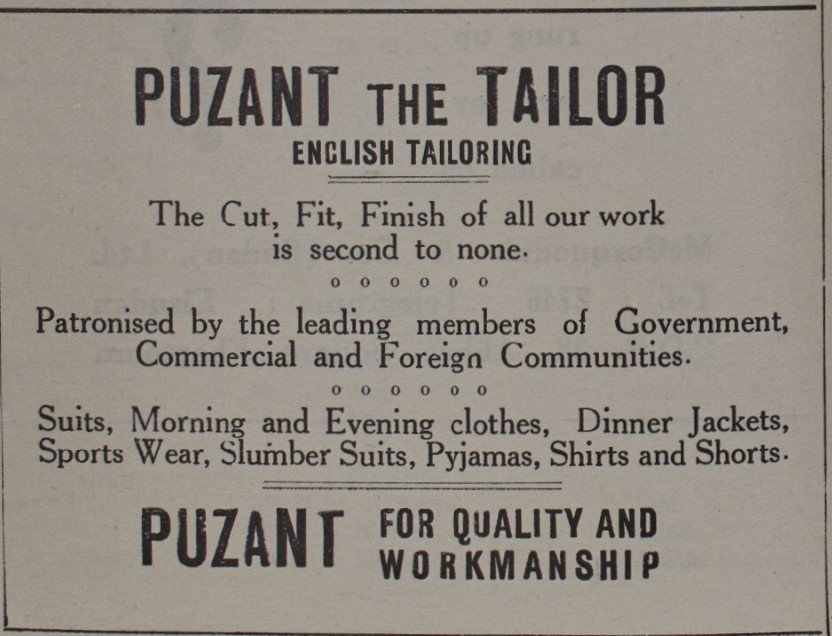
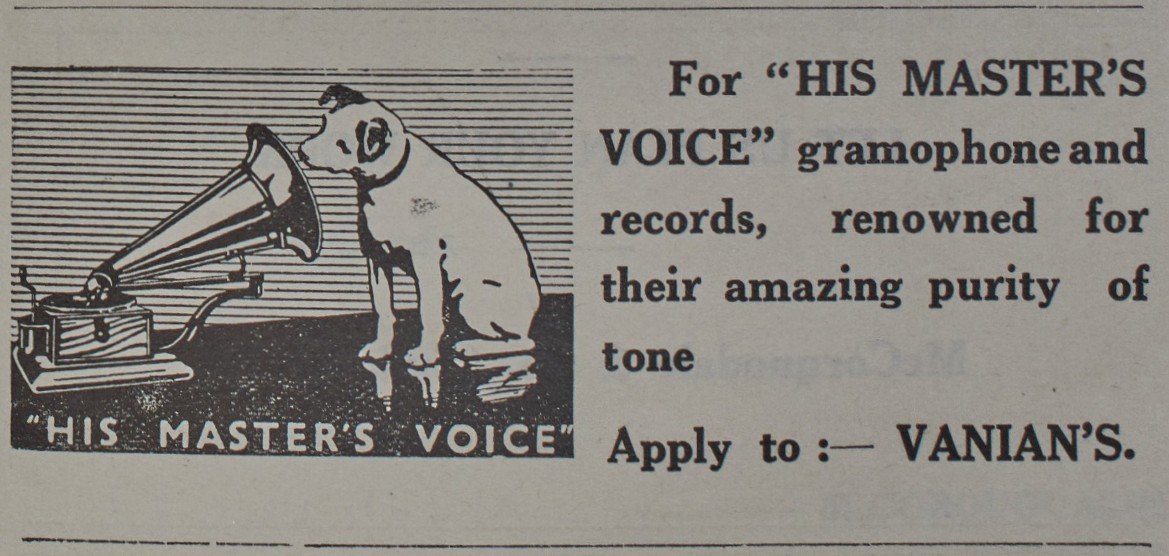
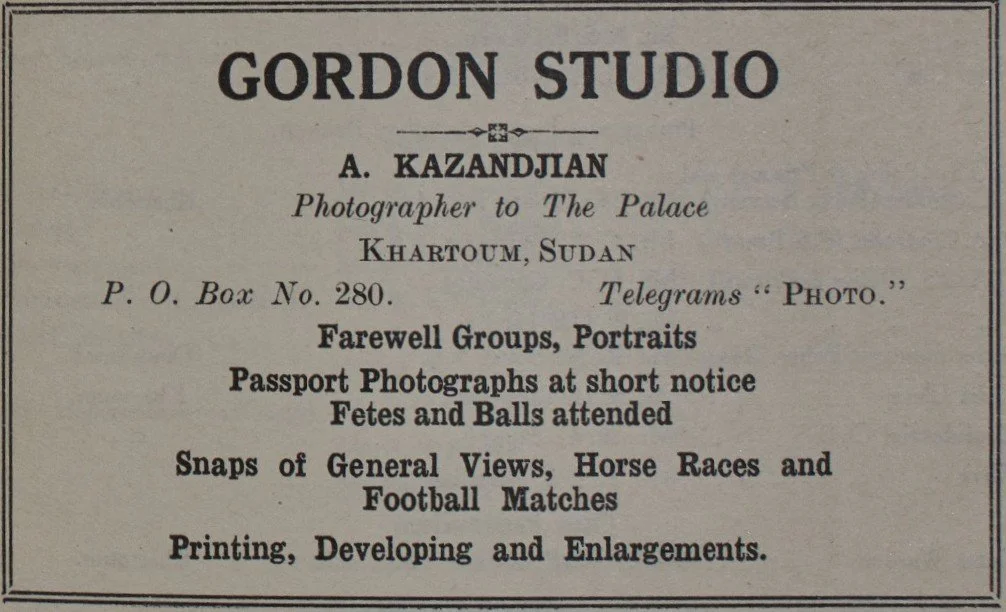
As we referred to in our article ‘Constructing Sudanese Armenian Visual Identity’, advertisements, letterheads and more broadly the ‘art of commerce’ from Sudanese Armenian businesses, speaks to the nature of the community with the majority working in trade, the audiences in mind based on language and style, but also to artistic styles of the times with Armenians adopting the latest typographies and advertisement styles to reflect their own business identities. The Sudan Directories, digitised by the archive contain many of these, some of which we have displayed below, and the rest of which can be seen via the digitised directories here.
A growing knowledgebase
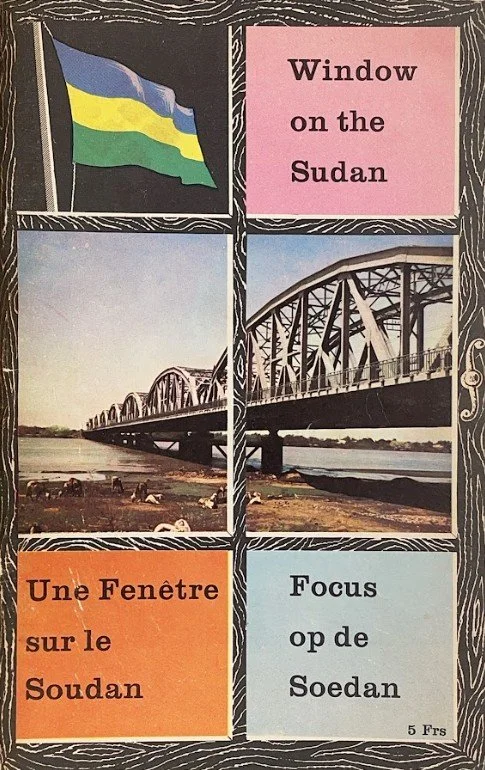
Description: Window on the Sudan
Location: Durham, UK
Source: Sudan Archive at Durham University (G//S 1553)
The Sudan Archive at Durham University contains many more documents on Sudanese Armenian history which are yet to be explored. In this article we did not cover a set of legal cases from the Court of Appeals that are particularly telling about the community and their interactions within the colonial legal structure - this will have its own article in the future. There are many letters from Sayid Abdul Rahman Al Mahdi that speak to his relationship with his advisor and agent SN Kurkjian that we will corroborate with documentation from the British National Archives in Kew to write a more stand alone history of this relationship. And then there are minor artifacts such as photographs including one taken by Andon Kazandjian’s studio of the White Flag League (which is telling as to his role in Khartoum society being the official photographer for the British and what would become a revolutionary movement!), more postcards from Armenian studios, a note from Diran Gumuchian regarding the purchase of coat hangers in 1969, and much more. The archive is a treasure on Sudanese and Sudanese Armenian history. As more of it becomes catalogued, indexed and digitised it will become easier to access and search through efficiently.
The archival find that really shifts our understanding on the history of the community is the data on migration from the Governor General’s Report. It is unprecedented as the first ever statistical evidence for the number of Armenians in Sudan beyond membership lists for the AGBU and a 1939 directory of Armenians in Sudan which this project had used as proxies for statistics in light of an absence. This combined with the statements from Bishop Gwynne in regards to the ‘Fellowship of Unity’ suggest there were more Armenians who came to Sudan before the Armenian Genocide of 1915 than previously thought, and that many of these were not merchants, but struggling economic migrants and refugees, seeking work and survival in the new British frontier colony. This is counter to our previous conclusions based on our other sources that the pre Genocide community was overwhelmingly dominated by merchants who has secured significant wealth.
And of course, further to expanding and honing our conclusions on Sudanese Armenian history, the archival finds vis a vis the community continue to push our understanding of British colonialism in Sudan whether that be via the treatment of Armenians, the education system funded to exude power rather or directly via the tone of the British rulers like the following from Earl Cronmer in the 1905 Governor’s Report:
“The main utility of the Sudan, in so far, at all events as Egypt is concerned, does not, indeed, depend on the capacity for local development. It is derived from the fact that the Nile runs through the country, and that complete control over that river throughout its course is a matter of vital importance to the Egyptians”

Notes:
A huge thanks to Noune Mardirossian for her support in the archival research at Durham, to Anouch Vanesyan for translating archival material from French and Fatma Saleh for translating archival material from Arabic.
The Sudan Archive at Durham University has expanded since its establishment to include material up to the present day and the surrounding region. It holds over 400 separate collections of individuals, businesses and organisations, in addition to photos, cinefilms, maps, museum objects and a large amount of printed material predominantly in English. More information including digitised collections can be seen via their website.
Rajeev Syal and Diane Taylor, "Sudanese students say UK visa ban has dashed hopes of studying at top universities," The Guardian, 10 March 2026. The UK Home Secretary suspended student visas for Sudanese nationals in March 2026, affecting over 200 students with confirmed university offers.
Brutiras Sarkis is mentioned as an agent of Dr Emin Bey in a letter to Slatin Pasha (SAD.104/3/15–16), in which Dr Emin Bey refers to him as his lost agent, dated 1886.
The letter (SAD.277/5/50) in the Wingate Papers, dated 1905 and addressed to Colonel Owen, the Sudan Agent in Cairo, refers to Michael Movsesian — better known as Michael Moses, an Armenian born in Baghdad who served the British in East Africa and was active in Kitchener's campaign against the Mahdiyya (discussed further in our article on Armenians in the Mahdiyya) — not by his full name but as 'an Armenian of the name of Moses.' The letter, signed only as Frank, notes that Moses is in 'trouble with the authorities in the Bahr el Ghazal' but vouches for his usefulness, stating that he 'is a man who supplies the I.D with a certain amount of useful information' and that he 'rendered invaluable service, I understand, during the Uganda mutiny.' The note reads as a character reference or plea to Colonel Owen to assist Moses given his proven utility to the British.
The letters of Nubar Pasha referenced here relating to Sudan can be found in the Sudan Archive at Durham University under SAD.246/7/61–64, 68–69 and SAD.896/7/1–2.
Armenians are referenced in Sudan Intelligence Report No. 60, 25 May – 31 December 1898, accessible via the Sudan Archive at Durham University here.
The letter from Arakil to Slatin Pasha (1900) regarding the debt owed for supplies during the journey to Dongola can be found in the Sudan Archive at Durham University under SAD.438/669/1–2.
The letters from Bishop Gwynne's collection can be found in the Sudan Archive at Durham University under SAD.419/6/1–87.
The order of service for the combined church service held at Khartoum's Anglican Cathedral can be found in the Sudan Archive at Durham University under SAD.683/1/10.
The marriage certificates for Khartoum's Anglican Cathedral can be found in the Sudan Archive at Durham University under SAD.849/1/1–63.
The letters referring to Unity High School can be found in the Sudan Archive at Durham University under SAD.28/17/22.
The quote is from P.M. Holt, A Modern History of the Sudan: From the Funj Sultanate to the Present Day (London: Weidenfeld & Nicolson, 1961).
Documents relating to the establishment of Unity High School and the Armenians on its running committee can be found in the Sudan Archive at Durham University under SAD.28/13/81–83, 86–88 and SAD.28/17/42 respectively.
For more on Farah Wad Taktouk, see this article from Safeguarding Sudan's Living Heritage. The prophecy attributed to him — "at the end of time the English will come to you whose soldiers are called police: they will measure the Earth even to the blades of sedge grass" — is cited in P.M. Holt, A Modern History of the Sudan: From the Funj Sultanate to the Present Day (London: Weidenfeld & Nicolson, 1961).
The Governors-General's Reports from the Condominium period of British rule in Sudan are an invaluable source for researchers. Provincial governors and departmental heads submitted detailed annual reports to the Governor-General, who compiled them into reports submitted in turn to the High Commissioner in Egypt. Those covering 1902–1914, during General Sir Reginald Wingate's tenure as Governor-General, are particularly rich in information and statistics on every aspect of the administration. They can be accessed via the Sudan Archive at Durham University here.
The quotes referenced here are drawn from Report on the Finances, Administration and Condition of the Sudan, 1902, p. 280, accessible via the Sudan Archive at Durham University here.
The quotes referenced here are drawn from Report on the Finances, Administration and Condition of the Sudan, 1903, p. 5, accessible via the Sudan Archive at Durham University here.
Further detail on the experimental farms can be found in Report on the Finances, Administration and Condition of the Sudan, 1903, p. 135, accessible via the Sudan Archive at Durham University here.
The quote referenced here is drawn from Report on the Finances, Administration and Condition of the Sudan, 1905, p. 15, accessible via the Sudan Archive at Durham University here.
Data drawn from the Halfa Province section of Anglo-Egyptian Sudan annual reports, 1902 and 1905–1910, recording foreign national arrivals primarily via Wadi Halfa. Tourists and women tourists have been excluded from all figures as they do not reflect migration or community formation. Full data, methodology, arithmetical discrepancies, and category notes are available in the accompanying spreadsheet, which contains raw data by nationality and year, occupation breakdowns, 1905 destination data, and a full methodology note here. Analysis covers 193 recorded Armenian arrivals across the period; total figures should be understood as a partial count of documented formal arrivals only, not a comprehensive migration total.
Shaké Keshkekian's personal papers, photographs, and documents are held at the Sudan Archive, Durham University Library, reference G//S 1553.
Russell McDougall, Letters from Khartoum: D.R. Ewen — Teaching English Literature, Sudan, 1951–1965, Postcolonial Lives, vol. 1 (Brill), pp. 186, 225. The book also refers to her uncle's store, Mayfair Stores, which faced a legal case over currency irregularities amounting to £2,000, a matter that caused Shaké considerable personal strain.
Records relating to the Vanian Cup can be found in the Sudan Archive at Durham University under SAD.800/4/1–34.
Records relating to the Vanian profiteering case can be found in the Sudan Archive at Durham University under HAW.2/1/1–30.
This was not Mr Vanian’s first run in with the law, we found at least one reference via ‘Sudan Government v. Souren Vanian (Cr.App. 6) Law Reports ‘ from the Court of Criminal Appeal which was regarding Mr Souren Vanian driving while not having a valid driving license or insurance.
References for items mentioned in the closing section: letters relating to Sayid Abdul Rahman Al Mahdi and his relationship with SN Kurkjian can be found at SAD.779/10/41–42, 49–51, 53–55 and SAD.970/4/1–63; the note from Diran Gumuchian regarding the purchase of coat hangers (1969) is at SAD.1074/7/29–30. The Court of Appeals legal cases are held under SAD.G//S 455, Box A; SAD.G//S 455, Box 3, File 9; and SAD.G//S 455, Box 4, File 10. All held at the Sudan Archive, Durham University.
Stay updated:
Stay updated on our latest releases - give our social media pages a follow.
We would love to hear from you, whether it be a reflection on this post, a correction or a suggestion, send us an email at info@sudanahye.com.